

『Transmission Fluid Flow Meter Test Bench Precision Standards』Related information(clamp on meter|electromagnetic meter|venturi meterrotameter|orifice meter|ultrasonic flow meter|mass flow meter|coriolis mass flow meter|coriolis flow meter|magnetic flow meter|magmeter flow meter|magflow flow meter|mag meter flow meter|electromagnetic flow meter|vortex flow meter|turbine flow meter|thermal mass flow meter|thermal flow meter|rotameter flow meter)
Transmission Fluid Flow Meter Test Bench Precision Standards
Quick Answer
Transmission fluid test bench precision relies on the flow meter type, fluid conditions, and calibration method. For ATF, CVT fluid, or hydraulic oil test benches, a positive displacement flow meter usually gives accuracy of ±0.5% of reading or better. Silver Automation Instruments supplies meters with traceable real-fluid calibration for these demanding applications.
Why Test Bench Accuracy Matters for Transmission Fluids
A transmission fluid test bench measures flow to verify pump performance, cooler pressure drop, or valve body function. A measurement error of only 1 percent can hide a real fault or signal a false pass. A transmission plant in Indonesia shifted from a turbine meter to an oval gear meter and cut reject rates by 12 percent. The bench was testing CVT fluid at 80 degrees Celsius and 15 bar. The oval gear meter kept its accuracy even when fluid viscosity jumped from 35 cP to 42 cP during warm-up.
Engineers do not trust raw sensor data. They trust repeatable data. That means the flow meter must produce the same reading under the same conditions every cycle. Test benches often run 100 to 500 cycles per day. A repeatability of 0.1 percent or better is standard. Some turbine meters drift after 2,000 cycles because of bearing wear. Positive displacement meters like oval gear types show far less drift.
Which Flow Meter Types Fit a Transmission Fluid Bench
Most test benches use one of three technologies: positive displacement, Coriolis mass flow, or turbine. Each behaves differently with transmission fluids.
Oval gear flow meters trap fluid in known pockets and count rotations. They work well with lubricating fluids from 10 cP to 1,000 cP. A customer in Thailand uses our OGM-AL oval gear meter with DN15 connections on a DCT fluid test bench. The meter outputs 4-20 mA and pulse. Accuracy is ±0.5 percent of reading down to 0.02 L/min. Price for this meter starts at about USD 1,200 ex-works.
Coriolis mass flow meters measure mass directly, not volume. So viscosity changes do not affect the reading. A Coriolis meter can also detect air bubbles that cause test errors. For a CVT fluid test bench in Mexico, we supplied a CMF-015 Coriolis meter with density output. The bench used it to check for aeration after the cooler cycle. The meter handled 120 degrees Celsius and 30 bar line pressure. Accuracy was ±0.2 percent of rate. Pressure drop is higher, so you must check the pump head.
Turbine flow meters cost less but are sensitive to viscosity swings and flow disturbances. In practice, most engineers skip the turbine option for automatic transmission fluids. ATF viscosity can change a lot during warm-up. Even then, a 20 x DN straight run eats bench space. Oval gear or Coriolis meters are the safer choice.
Calibration Standards and Traceability
A flow meter accuracy claim means nothing without a calibration certificate. For test benches, we recommend ISO 17025 accredited calibration with the actual transmission fluid, not water. A water calibration for an oval gear meter underestimates slip at low viscosity. Silver Automation Instruments offers real-fluid calibration using Shell Spirax S4 ATF or equivalent fluid at 40 and 80 degrees Celsius. T
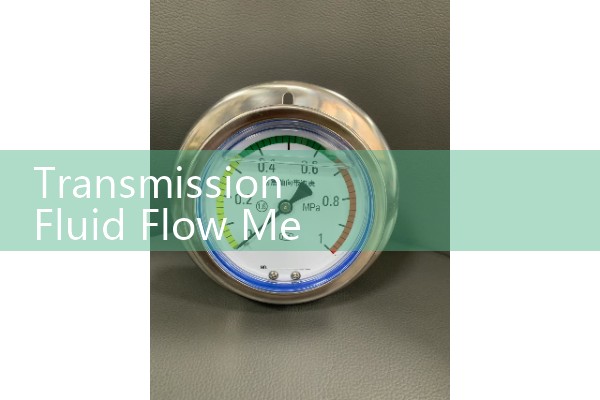
Some OEM test bench specs demand a master meter comparison on site. We can supply a portable Coriolis reference meter that you can rig in series. This reference meter has an accuracy of ±0.1 percent and becomes your daily check standard. We have seen several sites in Malaysia use this setup for ISO 9001 audits.
How to Choose a Flow Meter for Your Test Bench
Send us your pressure (bar), temperature (°C), pipe size (DN), and the full flow range. Also tell us the fluid type: ATF Dexron VI, CVT fluid, or hypoid gear oil. We will suggest a meter model, connection type (flanged, threaded, tri-clamp), and output signals (4-20 mA HART, pulse, MODBUS RTU). A typical recommendation for a mid-range bench is the OGM-DN15 oval gear meter with an integrated PT100 temperature sensor. ATEX Zone 2 certification is available. Price for this setup is around USD 1,650 FOB Shanghai.
Please do not send a request just for a price list. We engineer the meter into your system. That saves you time when you mount the meter in a tight loop.
Frequently Asked Questions
What is the typical accuracy of a flow meter on a transmission fluid test bench?
You can expect ±0.5 percent of reading with an oval gear meter and ±0.2 percent of rate with a Coriolis mass flow meter. The real accuracy depends on fluid viscosity, temperature, and calibration. A meter calibrated on water can show 1-2 percent error with ATF. Always ask for real-fluid calibration.
How does fluid viscosity affect the measurement?
Positive displacement meters have a slight slip that increases when viscosity drops. At 100 degrees Celsius, ATF viscosity is around 7 cP. Some oval gear meters under-read by 0.3 percent at this low viscosity. Coriolis meters see no direct viscosity effect because they measure mass. For wide-temperature testing, Coriolis is preferred.
Can I use one flow meter for multiple transmission fluid types?
Yes. You need a meter with a wide viscosity range and corrosion-resistant internals. Our OGM-AL series uses an aluminum body with FKM seals, compatible with most mineral and synthetic ATF fluids. For PAO or ester-based fluids, we recommend stainless steel internals. Each fluid type should have a separate calibration curve. We can store up to five curves in the meter electronics.
What output signals do I need for test bench integration?
A 4-20 mA loop with HART protocol is standard. It gives flow rate and diagnostic data. Pulse output is useful for totalizing test volume. MODBUS RTU via RS485 is common for direct PLC integration. All our meters can output 4-20 mA, pulse, and RS485 MODBUS simultaneously. You can monitor rate on the HMI and log totals on the SCADA.
How often should I recalibrate the flow meter on a test bench?
Most automotive quality standards require annual recalibration. We recommend a 6-month check with a reference meter if the bench runs more than 1,000 cycles per month, especially with abrasive fluids. One customer in India uses a master Coriolis meter on a quick-connect to verify the bench meter monthly. That takes 20 minutes. The master meter goes to the accredited lab once a year.
 Hot Product
 Related AD