

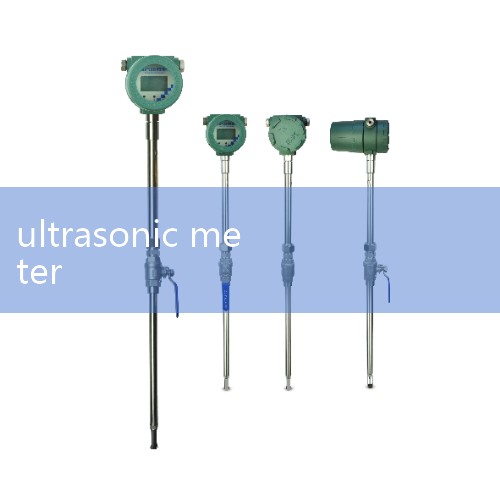
『ultrasonic meter』Related information(clamp on meter|electromagnetic meter|venturi meterrotameter|orifice meter|ultrasonic flow meter|mass flow meter|coriolis mass flow meter|coriolis flow meter|magnetic flow meter|magmeter flow meter|magflow flow meter|mag meter flow meter|electromagnetic flow meter|vortex flow meter|turbine flow meter|thermal mass flow meter|thermal flow meter|rotameter flow meter)
What are the performance characteristics of ultrasonic liquid level sensors?
Ultrasonic level gauges can adopt two-wire, three wire, or four wire technology. The two-wire system is: power supply and signal output are shared; The three wire system is: the power supply circuit and the signal output circuit are independent. When using DC 24V power supply, a 3-core cable can be used, and the negative end of the power supply and the negative end of the signal output share the same core wire; When using AC 220V power supply or DC 24V power supply and requiring complete isolation between the power supply circuit and the signal output circuit, a 4-core cable should be used. DC or AC power supply, with 4-20mADC and high/low switch output. The range of the split type ultrasonic level gauge is 0-50 meters, with multiple forms to choose from, suitable for various corrosive and chemical applications, high accuracy, remote signal output, and PLC system monitoring. The working principle of the ultrasonic liquid level meter in English is that the ultrasonic transducer (probe) emits high-frequency pulse sound waves, which are reflected back on the surface of the measured material and converted into electrical signals by the transducer The propagation time of sound waves is directly proportional to the distance they travel to the surface of an object The relationship between the distance S of sound wave transmission, the speed C of the sound sail, and the time T of sound wave transmission can be expressed by the formula: S=C × T/2. The probe part emits ultrasonic waves, which are then reflected by the liquid surface and received by the probe part. The distance from the probe to the liquid (object) surface is proportional to th
2. Common abbreviations in biological laboratories
Common abbreviations in biological laboratories include but are not limited to the following categories:
1. Abbreviations related to quality control: Mblk: Method blank.
. QC:Quality control, Quality Control. QA:Quality assurance, quality assurance RPD:Relative percent difference, Relative percentage difference. CCV:Continuing calibration verification, Continuous curve calibration. MDL:Method detection Limit, Method detection limit. LOQ:Limit of Quantitation, Quantitative limit. LQC:The lowest concentration of calibration curve, The lowest concentration point of the curve (done daily). LSK:The lowest concentration spike sample, Matrix labeling (done once a month). PRM:Primary Reference Material, Reference material. CRM:Certified Reference Material, Certified standard substances. IRM:Internal Reference Material, Internal standard substance.2. Abbreviations related to file names SOP: Standard Operation Procedure, Inspection Method Operation Manual.
. EOP:Equipment operation procedure, Operation manual for the use of instruments and equipment. QAM:Quality assurance manual, Quality Management Homework Manual. GL:Guideline, Guidelines for Chemical Laboratory Operations. CP:Calibration procedure, Guidelines for Internal Calibration of Chemical Laboratory Instruments. CAR:Corrective Action Record, Corrective action records. PAR:Preventive action record, Record of preventive measures.3. 5S safety related abbreviation HSE: Health and Safety Environment. MSDS:Material safety data sheet, Chemical Safety Technical Data Sheet. PPE:Personal Prote
 Hot Product
 Related AD