

『Animal Fat Flow Meter Steam Tracing and Insulation Rules』Related information(clamp on meter|electromagnetic meter|venturi meterrotameter|orifice meter|ultrasonic flow meter|mass flow meter|coriolis mass flow meter|coriolis flow meter|magnetic flow meter|magmeter flow meter|magflow flow meter|mag meter flow meter|electromagnetic flow meter|vortex flow meter|turbine flow meter|thermal mass flow meter|thermal flow meter|rotameter flow meter)
Animal Fat Flow Meter: Steam Tracing and Insulation Rules
Quick Answer: Animal fat flow measurement demands heated flow meters. Without proper steam tracing and insulation, tallow, lard, or poultry grease will solidify between 30 °C and 50 °C and block the meter. A heated oval gear meter or a Coriolis meter with a factory-fitted steam jacket keeps the fat above its pour point. Maintain the meter body at 10 °C to 15 °C above the cloud point. Always insulate the meter, flanges, and neighboring pipes. Silver Instruments supplies steam-jacketed oval gear flow meters and Coriolis meters with insulation kits from DN15 to DN100.
Why steam tracing is not optional for animal fat
Animal fat changes from liquid to paste fast. In a cold morning shift at a rendering plant in New Zealand, we saw a standard oval gear meter seize because the fat inside cooled to 34 °C. The operator had traced the pipe but left the meter body exposed. Here is the thing. Most engineers skip the meter when they run steam lines. That single cold spot stops the whole batching process. Tallow, lard, poultry oil, and fish oil all have pour points between 28 °C and 48 °C. Operating temperature for transfer is usually 60 °C to 90 °C. You need external heat input to the flow meter, not just to the pipes. Steam tracing delivers stable and uniform heat. It is also cheap if your site already has low-pressure steam.
Steam tracing installation rules
Wrap the meter body in a spiral pattern using a 10 mm or 12 mm stainless steel tracing tube. Do not attach a straight steam pipe to one side only. Uneven heating distorts the measuring chamber and ruins accuracy. Use saturated steam at 1 to 3 bar (g). A PT100 sensor inserted into the meter block, available as an option on Silver OGF oval gear meters, transmits a 4-20 mA signal to a temperature controller. This controller throttles the steam supply valve. The setpoint should be 15 °C above the fat pour point. For beef tallow with a pour point of 44 °C, set the controller at 60 °C. Overheating above 120 °C causes fat cracking. We have cleaned meters in a Brazilian gelatin plant where carbon deposits had scraped the oval gears. Keep tracing lines separate for the meter and the pipe. This lets you adjust heat individually during CIP or downtime.
Insulation rules that prevent cold spots
Thermal insulation must cover the meter, flanges, and at least 300 mm of adjacent pipe on both sides. Use hydrophobic rock wool or glass wool with a minimum thickness of 40 mm. In outdoor installations in Southeast Asia or the Middle East, add an aluminum or stainless steel weatherproof cladding. Cladding joints must overlap and seal against rain and washdown water. Many sites in Australia use 50 mm thick rock wool with a 0.8 mm aluminum sheet. The flange bolts and drain plugs also need removable insulation caps. Without these, a flange can lose heat fast and form a solid fat plug right at the inlet. An insulation contractor in Perth told us they add a 20 mm thick blanket under the tracing tube before the main insulation layer. That prevents temperature drop at the metal-to-air interface. In practice, you should reach a surface temperature below 45 °C on the cladding to meet personnel protection standards.
Recommended flow meter types with steam jackets
Silver OGF oval gear flow meter with integral steam jacket. This meter handles fat viscosities from 10 cP to 1,000 cP. The measuring chamber is made of hard-coated aluminum or stainless steel. The gears run on smooth radial bearings, lubricated by the
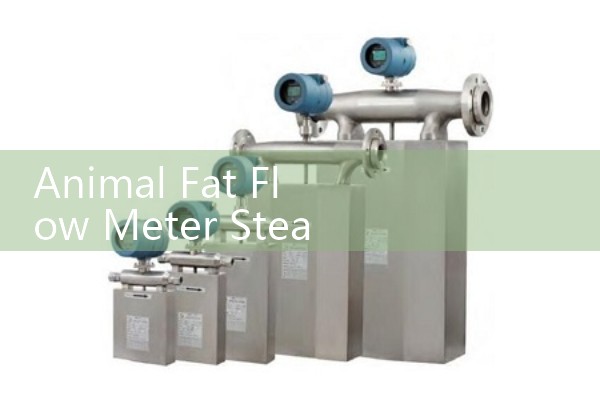
Silver CMF Coriolis mass flow meter with heating jacket. If your plant needs mass measurement in kg/h, direct density output, or batching control, use a Coriolis meter. The heating jacket option circulates steam or hot oil through a stainless steel shell welded to the sensor tubes. It maintains the sensor temperature with a variation of less than ±1 °C. This meter measures animal fat with an accuracy of ±0.1% of mass flow rate. It is not affected by viscosity changes. A rendering company in Thailand uses two Silver CMF-DN25 Coriolis meters with steam jackets to dose tallow into a biodiesel reactor. They run at 80 °C and 8 bar. Because the sensor tubes are self-draining, cleaning with hot water after a batch is fast.
Cold start, draining, and cleaning rules
Before introducing fat into the meter, preheat the jacket for at least 20 minutes. Use a thermocouple on the meter body inlet to confirm the temperature. Then flush the meter with hot oil or water at the operating temperature. After a batch, do not leave fat inside the meter. Most plants purge the line with compressed air or push hot water through. A customer in Vietnam had a DN50 oval gear meter freeze because they shut off steam without draining. The solidified fat expanded and cracked the aluminum housing. Always open the drain plug at the lowest point, and keep a light steam trace on the jacket during standby. If you use electric tracing as backup, set the thermostat 5 °C lower than the steam setpoint so electric heating only takes over when steam fails.
FAQ
Can I use an electromagnetic flow meter for animal fat? No. Animal fat has extremely low electrical conductivity, typically below 5 µS/cm. Electromagnetic flow meters require at least 5 µS/cm to function reliably. Stick with oval gear or Coriolis meters.
What steam pressure do I need for the meter jacket? Usually 1 bar to 3 bar (g) is sufficient. High pressure is not required. Use saturated steam, not superheated steam, to get stable heat transfer. A 2 bar supply can heat a DN40 meter jacket to 85 °C within 15 minutes.
Is electric tracing a good alternative? Yes, electric tracing works if steam is not available. However, electric tracing takes longer to heat and can create hot spots if the cable is not uniformly wound. We recommend steam as the primary heat source and electric tracing only as standby or for small DN15 meters.
How do I prevent fat from building up inside the meter? Keep the meter at a steady temperature during operation and idle times. After shutdown, flush with hot water (80 °C) or hot oil immediately. Open the drain plug. Never let fat cool inside the measuring chamber. Weekly checks with a borescope help catch early carbon deposits.
What information do I need to send for a quotation? Send us your fat type, its pour point or cloud point, your normal flow rate in kg/h or L/min, operating temperature and pressure, pipe size (DN), and available steam pressure. We will recommend a heated meter and insulation kit. Our engineers also review your piping layout if you share a sketch.
 Hot Product
 Related AD