

『Halliburton Turbine Flow Meter Calibration: Proving High-Pressure Liquid Yields to API Standards』Related information(clamp on meter|electromagnetic meter|venturi meterrotameter|orifice meter|ultrasonic flow meter|mass flow meter|coriolis mass flow meter|coriolis flow meter|magnetic flow meter|magmeter flow meter|magflow flow meter|mag meter flow meter|electromagnetic flow meter|vortex flow meter|turbine flow meter|thermal mass flow meter|thermal flow meter|rotameter flow meter)
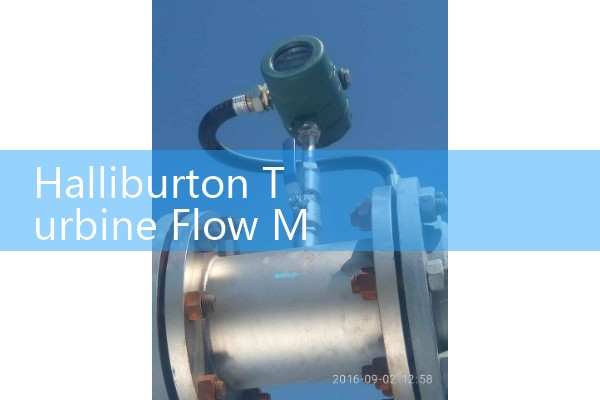
Halliburton Turbine Flow Meter Calibration: Proving High-Pressure Liquid Yields to API Standards
Quick Answer: Halliburton turbine flow meters used for high-pressure liquid yields need regular proving under API MPMS standards, especially Chapter 5.3 and Chapter 4.2. A prover catches meter factor drift before it creates billing or batch errors. For operators running 10,000 psi to 15,000 psi frac lines, a tolerance of plus or minus 0.25 percent is achievable only when calibration records and fluid conditions match the original test.
Why High-Pressure Liquid Calibration Is Different
Most flow meter calibration labs test with water at low pressure. That does not predict what a turbine meter does with slickwater, linear gel, or diesel at 12,000 psi. Halliburton turbine meters often sit on frac trucks, cement pumps, or nitrogen units where flow changes from 0.5 bbl/min to 80 bbl/min in seconds. The meter body sees vibration, sand, and rapid temperature swings. These conditions change bearing friction, rotor slip, and K-factor. In practice, a turbine meter that passes a water calibration can shift by 1 percent or more on a high-pressure frac job. That shift is money when a single stage uses 200,000 lb of proppant and 8,000 bbl of fluid.
API Standards for Turbine Meter Proving
API MPMS Chapter 5.3 covers turbine meters in liquid hydrocarbon service. It describes installation, pulse counts, repeatability, and K-factor adjustment. Chapter 4.2 covers pipe provers. Chapter 12.2 covers calculation of measured quantities. Halliburton service companies often align their field tickets with these chapters because buyers in Texas, Alberta, Neuquen, or the Permian Basin ask for API compliant data. A field proving check with a compact piston prover on a frac spread is not a full calibration, but it does catch gross shifts. Operators who skip it may not see an error until a batch total does not match tank gauging or chemical volumes.
What a Typical High-Pressure Proving Run Looks Like
Here is the thing. A crew pulls a 4 inch turbine meter from a Halliburton frac trailer or cement unit after a job. The meter tag shows the last K-factor, the fluid type, and the test date. The technician runs a bench check with a master meter or a pipe prover at 3 to 4 flow points. For frac applications, those points might be 5, 15, 30, and 60 bbl/min. The temperature may drop from 40 degrees C in summer to 5 degrees C in a winter job in Western Canada. The test fluid viscosity may be 2 cP for slickwater or 25 cP for a linear gel. Each point must hold repeatability within API requirements. If the meter factor at 15 bbl/min differs from the factor at 60 bbl/min by more than 0.25 percent, the meter may need bearing replacement, rotor inspection, or a new K-factor curve. We have seen meters with a single K-factor posted even though the actual curve is not linear. That is common on older Halliburton turbine meters used across multiple service fluids.
Halliburton Turbine Flow Meter Calibration and Proving Costs
Cost depends on the meter size, pressure rating, and whether the unit is pulled from a truck or tested in place. A bench calibration for a 2 inch turbine meter may cost less than a full 4 inch high-pressure meter with pulse output and HART or 4-20 mA diagnostics. But field proving on a live frac tree is different. You pay for crew time, pump time, and a portable prover. A simple check at one flow point may take half a day. A full API MPMS Chapter 5.3 verification with multiple flow points can take a full day. In Southeast Asia and the Middle East, operators often ask for a calibration certificate from an ISO 17025 lab. Halliburton an
Signs Your Turbine Meter Needs Calibration or Replacement
Most engineers skip this part until a job report triggers an audit. Look for unstable pulse output, bearing noise, rotor coast time under 5 seconds after flow stops, or meter factors that drift more than 0.15 percent between identical jobs. Sand erosion on the rotor tips and a scratched inner bore reduce linearity. If a meter cannot hold API repeatability after three runs, repair may cost more than replacement. In that case, a Coriolis mass flow meter or a vortex flow meter can replace the turbine meter on clean fluids. Silver Automation Instruments supplies high-pressure liquid meters for well service, chemical injection, and produced water. Send us your pressure (bar), temperature (°C), pipe size (DN), and flow range. We will quote a meter that fits your API proving routine.
How Silver Automation Instruments Supports High-Pressure Liquid Metering
We do not sell Halliburton branded turbine meters. We supply alternatives and spare parts that work with high-pressure liquids, frac chemicals, and oilfield water. Our product range includes Coriolis mass flow meters, electromagnetic flow meters, vortex flow meters, oval gear flow meters, and pressure transmitters. For a fracturing blender or cementing skid that needs a stable pulse output, a vortex flow meter with a calibration certificate may be a lower maintenance choice. For a chemical additive line with viscous fluid, an oval gear flow meter can handle 1 cP to 1000 cP depending on the model. For produced water with solids, an electromagnetic flow meter has no moving parts and no rotor to erode. Here is a practical note. A customer in Vietnam replaced a worn Halliburton turbine meter on a cementing unit with a Silver Instruments Coriolis meter sized for DN50, 6,000 psi, and 20 kg/s. The API proving run passed with a meter factor of 0.9998. That is not a promise for every job, but it shows the value of matching meter type to fluid and pressure.
FAQ
1. Does Halliburton calibrate turbine flow meters to API standards?
Yes. Halliburton service companies and authorized test labs can calibrate or prove turbine meters to API MPMS Chapter 5.3. The certificate must state the fluid, pressure, temperature, and flow points.
2. How often should a high-pressure turbine flow meter be calibrated?
In frac and cementing service, many operators test every 3 to 6 months or after every 50 to 100 jobs. If the meter sees sand or abrasive chemicals, test it more often.
3. What is the difference between calibration and proving?
Calibration adjusts the meter output or K-factor to a reference standard. Proving checks the meter factor against a prover over a short period and catches drift.
4. Can Silver Instruments replace a Halliburton turbine meter on a frac truck?
We supply Coriolis, vortex, and oval gear flow meters for high-pressure liquid lines. Send us your pressure (bar), temperature (°C), pipe size (DN), and flow range for a fit check.
5. What is a normal K-factor for a turbine flow meter?
It varies by size. A 2 inch Halliburton turbine meter may have a K-factor around 200 to 300 pulses per gallon. A 4 inch meter may produce 30 to 60 pulses per gallon depending on the fluid and pressure rating.
For technical selection support or a quote, contact Silver Automation Instruments. Tel: +86-25-68650347. WhatsApp: +86-25-52155837. WeChat: +86 15365082610.
 Hot Blog
 Related AD