

『Low Temperature Oil Flow Meter: Keeping Electronics Safe in Sub-Zero Climates』Related information(clamp on meter|electromagnetic meter|venturi meterrotameter|orifice meter|ultrasonic flow meter|mass flow meter|coriolis mass flow meter|coriolis flow meter|magnetic flow meter|magmeter flow meter|magflow flow meter|mag meter flow meter|electromagnetic flow meter|vortex flow meter|turbine flow meter|thermal mass flow meter|thermal flow meter|rotameter flow meter)
Low Temperature Oil Flow Meter: Keeping Electronics Safe in Sub-Zero Climates
Quick Answer
Standard flow meters fail in sub-zero oil applications because LCD screens freeze, moisture condenses inside the electronics, and oil viscosity spikes cause mechanical jamming. Silver Automation Instruments builds low-temperature oil flow meters with insulated transmitter housings, trace heating, and cold-rated transflective LCDs that read clearly at -40 °C. You get stable 4-20 mA HART or pulse output for fuels, lubricants, and hydraulic oils even at -35 °C ambient without external heat tracing in most setups.
Why Standard Flow Meters Freeze Up
Everything works in a warm calibration lab. The trouble starts when you install the meter on a diesel pipeline in the Andes or at a lube blending plant in Siberia. LCD screens turn black. Circuit boards collect condensation droplets that freeze and short the 24 V DC supply. Oval gear meters with magnetic pickup sensors can jam if the oil thickens past 1000 cP. We have seen this on customer sites many times. A customer in the highlands of Papua New Guinea ran a standard oval gear meter without heating. After two weeks of night temperatures dropping to -8 °C the LCD went blank and the reed switch output turned erratic. The replacement meter from us included a heater and solved both problems.
What Makes a Low Temp Oil Flow Meter Different
The core is not a standard meter left in the cold. It is a system designed for ice and condensation. Silver Instruments uses three layers of protection. First, the electronics compartment is sealed to IP67 with a Gore-Tex vent that equalizes pressure but blocks liquid water. Second, a small 24 V DC silicone heating pad wraps around the transmitter housing. This pad switches on at 5 °C and holds the internal temperature at 15 °C to 20 °C. Third, the LCD is a wide-temperature transflective display with no fluid inside that can freeze. You can read the totalizer in direct sunlight or at -40 °C.
For flow sensors we offer oval gear meters with PPS gears and stainless steel bearings for low-viscosity oils down to 2 cP. For heavy fuel oil at 500 cP to 1000 cP at -10 °C we pair the meter with a low-speed Coriolis mass flow meter. The Coriolis sensor is intrinsically safe for ATEX Zone 1 and the transmitter stays warm inside a heated enclosure.
Real-World Performance in Cold Climates
Last year a mine in the Atacama desert at 4400 meters altitude needed to measure diesel for generator sets. Ambient winter temperature drops to -25 °C at night. They installed a Silver Instruments oval gear meter DN25 with the heater option and an external PT100 to monitor fuel temperature for density correction. The 4-20 mA HART signal fed a remote I/O panel 300 meters away. After one winter season the LCD never blacked out and the pulse output deviation stayed below 0.5% of rate. A similar setup runs on a fish processing vessel in the Bering Sea measuring hydraulic oil. Salt spray, freezing spray, and vibration are constant. The meter performed without a single fault for 8 months.
Oil Types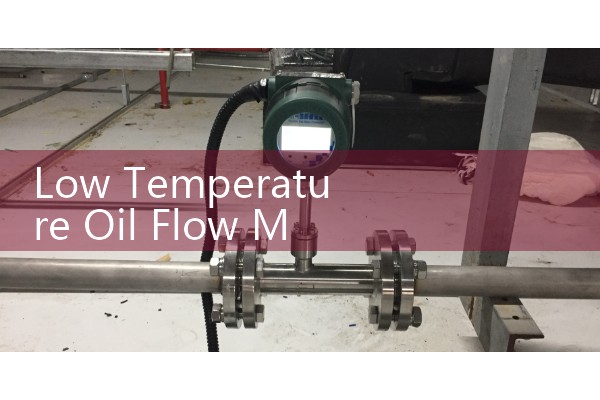
Most engineers forget that viscosity changes drastically with temperature. A lubricant rated at 68 cSt at 40 °C can reach 1500 cSt at -20 °C. Small oval gear meters with magnetic coupling can stall. For such cases we recommend a positive displacement meter with a pre-heater or a Coriolis meter that does not care about viscosity. For diesel, kerosene, and light oils with viscosity under 20 cSt at -20 °C a standard oval gear meter with a heated transmitter works well. Always send us the oil type, viscosity at two temperature points, and lowest operating temperature. Our application engineers will pick the right sensor type: oval gear, Coriolis, or ultrasonic for larger pipelines DN50 and above with low conductivity oil.
Installation Tips for Sub-Zero Oil Metering
Do not mount the flow meter at the lowest point in the pipe rack. Condensation always collects there. Install a drip leg upstream. Keep the transmitter away from wind chill because wind can strip heat faster than the heating pad can supply. If you use a remote-mounted transmitter, place it inside a GRP enclosure with a small thermostat-controlled heater. Use insulated pipe jackets on the meter body to hold a stable oil temperature above the cloud point. For fuels with wax appearance temperature problems, pre-heat the line upstream. Most engineers skip this part and then blame the meter.
Frequently Asked Questions
What is the lowest ambient temperature the electronics can handle? Standard low-temp transmitters work at -40 °C with the internal heater active. Without the heater the limit is -20 °C but expect slower LCD response.
Do I need a separate power supply for the heater? No. The 24 V DC loop power can supply the transmitter and the heating pad if your power budget allows. Usually a 2-watt heater draws 80 mA extra. Confirm with your power supply capacity.
Can the oval gear meter measure heavy oil at -15 °C? Yes, if the oil viscosity stays below 2000 cP at that temperature. For thicker oils we switch to a Coriolis meter with heated enclosure. Send us your oil spec sheet.
Are the meters certified for hazardous areas? Yes. We supply Ex d and Ex ia versions for ATEX Zone 1 and IECEx. The transmitter is intrinsically safe when paired with a Zener barrier.
How can I get a price for a low-temperature oil flow meter? Send us your oil type, lowest operating temperature (°C), flow range (kg/h or L/h), pipe size (DN), and required process connection (ANSI flange, tri-clamp, or thread). We will send a quotation within 24 hours. Email sales[at]flow-meter.com.au or use the inquiry form at flow-meter.com.au.
Your own cold-weather project might not reach -35 °C. But a meter built for extreme cold will always outlast a standard unit. No condensation issues. No frozen LCD. No jammed gears. We ship low-temp oil flow meters to remote sites in Chile, Peru, Mongolia, and Papua New Guinea every month. For oil flow measurement that works the first winter and the next 10 winters, choose a meter built for cold from the first bolt.
 Hot Blog
 Related AD