

『Hotline flowmeter』Related information(clamp on meter|electromagnetic meter|venturi meterrotameter|orifice meter|ultrasonic flow meter|mass flow meter|coriolis mass flow meter|coriolis flow meter|magnetic flow meter|magmeter flow meter|magflow flow meter|mag meter flow meter|electromagnetic flow meter|vortex flow meter|turbine flow meter|thermal mass flow meter|thermal flow meter|rotameter flow meter)

What is the working principle of a hot wire air flow meter? The working principle of the hot wire flowmeter is based on the change in heat carried away by the hot wire during gas flow to measure gas flow rate. Specifically, the hot wire will be exposed to airflow, and the faster the airflow speed, the more heat emitted by the hot wire will be carried away, resulting in changes in the temperature of the hot wire. By measuring this temperature change, information about gas flow rate can be indirectly obtained. Although the hot wire flowmeter has the advantages of simple structure and fast response, it also has certain limitations in practical applications. Especially when the front-end pressure changes, the measurement accuracy of the hot wire flowmeter will significantly decrease, especially in the application scenario of flow controllers. The root cause of this problem lies in the impact of pressure changes on gas flow rate, which in turn affects changes in the temperature of the hot wire. To solve this problem, many manufacturers have started introducing pressure sensors to offset errors caused by pressure changes. By monitoring the changes in front-end pressure in real-time and transmitting the data to the control system, the measurement results of the hot wire flowmeter can be calibrated to improve measurement accuracy. This improvement measure makes it possible for the application of hot wire flow meters in various complex environments, especially in situations where accurate flow control is required. However, although introducing pressure sensors can effectively improve the accuracy of disturbance measurement, it also brings additional costs and complexity. Therefore, in practical applications, it is necessary t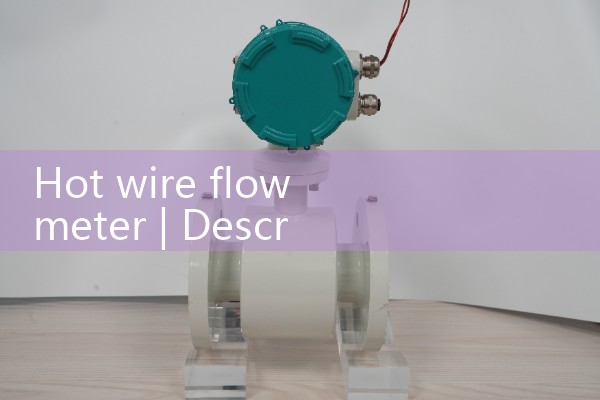
2. How to detect and solve hot wire and hot film air flow meters
Hot wire and hot film air flow meters have similar structural characteristics, that is, there is a hot wire or hot film in each intake channel. The working principle of these two sensors is also very similar, and they both need to be able to work under the condition of power supply.
. Both of them convert the intake volume into the output voltage, so the detection methods of these two air flow meters are basically the same. They can be detected during engine operation or after being removed and connected to the power supply according to their working requirements. The requirements for the working power supply, wiring harness socket form, and testing standards of various models of hot wire or hot film air flow meters are not completely the same. Taking the Nissan MAXIMA sedan VG30E engine as an example, this article introduces the inspection method of the hot wire air flow meter. The hot wire and hot film air flow meters of other vehicle models can be tested using Sun Youkaos method. 1. To test the air flow meter with a multimeter, the measurement method is as follows: (1) Unplug the wiring harness plug of the air flow meter and remove it. Connect the battery voltage to the D and E terminals in the flowmeter socket (note that the power polarity should be correct), and then use a multimeter to measure the voltage between the B and D Hot Blog
 Related AD