

 Current position > News detail
『Carbon dioxide gas flowmeter』Related information(clamp on meter|electromagnetic meter|venturi meterrotameter|orifice meter|ultrasonic flow meter|mass flow meter|coriolis mass flow meter|coriolis flow meter|magnetic flow meter|magmeter flow meter|magflow flow meter|mag meter flow meter|electromagnetic flow meter|vortex flow meter|turbine flow meter|thermal mass flow meter|thermal flow meter|rotameter flow meter)
1. Seeking advice on how to calibrate flow meters on carbon dioxide and argon gas regulators. According to the structural characteristics of carbon dioxide gas flow meters, self regulating instruments are classified into two types: self regulating integrated carbon dioxide gas flow meters and self regulating split carbon dioxide gas flow meters. Flange mounted carbon dioxide gas flowmeter. The integrated carbon dioxide gas flowmeter is a carbon dioxide gas flowmeter that integrates a flow sensor, temperature sensor, pressure sensor, and display instrument. It has intelligent temperature and pressure compensation functions, comes with a 3.6V high-energy battery or 24VDC (usually used when pulse signal output, two-wire 4-20mADC output, or RS485 communication is required) power supply, and displays the medium temperature (℃), working pressure (MPa), instantaneous standard condition volume flow rate (m ³/h), and cumulative standard condition volume flow rate (m ³) on the local LCD display. The split type carbon dioxide gas flowmeter consists of four parts: flow sensor, temperature sensor, pressure sensor, and intelligent flow display integrator. It has intelligent temperature and pressure compensation functions. The intelligent flow display integrator remotely displays the medium temperature (℃), working pressure (MPa), instantaneous standard condition volume flow rate (m ³/h), and cumulative standard condition volume flow rate (m ³). When only measuring the volumetric flow rate of the working condition is required (which we define as a simplified type, usually suitable for situations where the medium temperature and working pressure are basically constant), whether it is an integrated or split type, it does not have int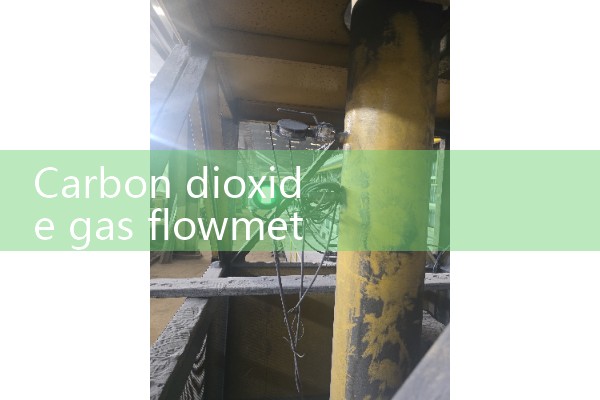
2. Sharing: Using V-cone flow to measure carbon dioxide
It is feasible to use V-cone flowmeter to measure carbon dioxide. The following is a specific analysis: The core feature of V-cone flowmeter is that it is a new type of differential pressure flow instrument. Its working principle is based on the differential pressure signal generated when the fluid flows through the conical throttling device, and the operating flow rate is calculated by measuring the differential pressure.
. Its core advantages include high signal stability: the conical structure makes fluid flow more stable, reduces turbulence interference, and has small fluctuations in differential pressure signals. Wide range ratio: can adapt to large-scale flow changes, suitable for scenarios with large flow fluctuations. Long service life: no moving parts, strong wear resistance, low maintenance cost. Strong adaptability: can be matched with different media, temperature, and pressure conditions through selection. Figure: Schematic diagram of the working principle of V-cone flowmeter. Physical properties and measurement requirements of carbon dioxide. Carbon dioxide (CO?) is a colorless, slightly acidic gas commonly used in industrial emissions, biological reactions, gas storage, and other scenarios. The measurement should pay attention to the following characteristics: density and compressibility: CO? Density varies significa