

 Current position > Product detail
『Wholesale of Doppler flowmeter』Related information(clamp on meter|electromagnetic meter|venturi meterrotameter|orifice meter|ultrasonic flow meter|mass flow meter|coriolis mass flow meter|coriolis flow meter|magnetic flow meter|magmeter flow meter|magflow flow meter|mag meter flow meter|electromagnetic flow meter|vortex flow meter|turbine flow meter|thermal mass flow meter|thermal flow meter|rotameter flow meter)

1. Doppler flowmeter
2. Flow measurement principle of Doppler ultrasonic flowmeter
The Doppler ultrasonic flowmeter calculates the flow velocity by detecting the Doppler frequency shift generated by the reflection of ultrasonic waves from solid particles in the fluid, and then combines it with the water passage area to obtain the flow rate. Its core collision detection principle is based on the mathematical relationship between the Doppler effect and fluid mechanics parameters.
1. Basic principle of Doppler effect Doppler effect refers to the frequency change of the received sound wave when there is relative motion between the sound source and the receiver: the relative distance decreases: the receiving frequency is higher than the transmitting frequency (such as the alarm sound becoming sharper when a police car approaches).
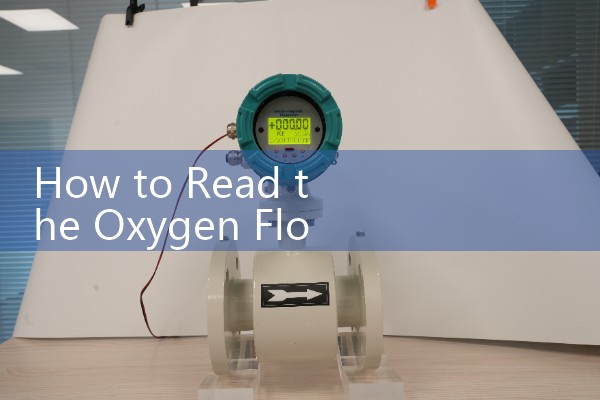
. Relative distance increase: The receiving frequency is lower than the transmitting frequency (such as when the alarm sound becomes low when the police car moves away). This effect exists in fields such as sound waves and light waves, and ultrasonic flowmeters use the propagation characteristics of sound waves in fluids to achieve measurements. Figure: SCJ-LL01 Doppler flowmeter (suitable for measuring fluids containing solid particles)2. Measurement principle of Doppler ultrasonic flowmeter: Sound wave emission and reflection. The ultrasonic transmitter serves as a fixed sound source and emits ultrasonic waves of a specific frequency (f) into the fluid. Solid particles in the fluid (such as impurities in sewage) act as "reflectors" to reflect incident ultrasonic waves back to the receiver. Due to the movement of particles with the fluid, the reflected wave frequ
III. Technical Features and Application Scenarios Core Advantages Anti impurity Interference: Relying on solid particle reflection sound waves, no clear fluid is required, suitable for media containing suspended solids and bubbles.
. Non invasive measurement: The ultrasonic probe can be externally attached or inserted into the pipeline to reduce interference with the fluid. Fast dynamic response: Real time monitoring of flow rate changes, suitable for fluids with large fluctuations (such as sewage discharge). Typical application of urban sewage pipelines: meas