

 Current position > News detail
『Oil flow meter』Related information(clamp on meter|electromagnetic meter|venturi meterrotameter|orifice meter|ultrasonic flow meter|mass flow meter|coriolis mass flow meter|coriolis flow meter|magnetic flow meter|magmeter flow meter|magflow flow meter|mag meter flow meter|electromagnetic flow meter|vortex flow meter|turbine flow meter|thermal mass flow meter|thermal flow meter|rotameter flow meter)
1. How to adjust the flow meter of a fuel dispenser?
Adjusting the flow meter of a fuel dispenser requires professional operation, and there are differences in the adjustment methods of flow meters for different models of fuel dispensers. Non professionals should not adjust it by themselves. The following is a brief description of the general methods. Mechanical adjustment method: Some old-fashioned fuel dispensers have mechanical adjustment devices for their flow meters. Usually, there are structures such as adjusting gears or screws inside the flowmeter. By changing the transmission ratio of the adjusting gear, such as increasing or decreasing the number of meshing teeth of the gear, the accuracy of flow measurement can be changed to achieve large or small flow adjustment; Adjusting screws may be used to adjust the stroke of internal components such as pistons or slides in flow meters. Changes in stroke can affect the volume of liquid measured each time, thereby affecting the flow display. Electronic adjustment method: Contemporary fuel dispensers often use electronic adjustment. First, enter the settings menu of the fuel dispenser, which usually requires specific operating steps and may involve entering passwords on the keyboard. After entering the Jingju menu, find the flow adjustment option. In this option, you can adjust the flowmeter coefficient according to the set parameter value through numerical input or up and down adjustment buttons. As the coefficient increases, the displayed flow rate of the fuel dispenser will correspondingly increase; As the coefficient decreases, the display of the amount of liquid and bright clusters will decrease. After the adjustment is completed, it is necessary to save t
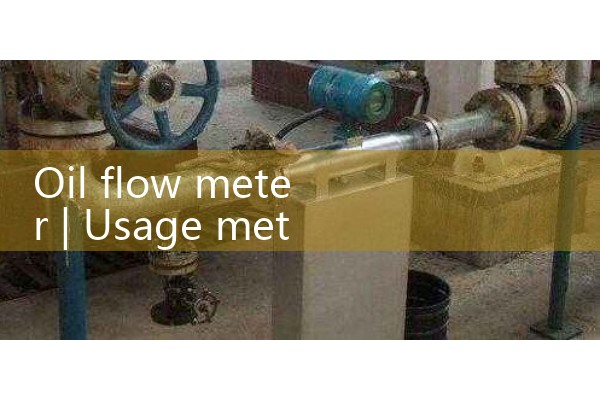
2. Which model of flow meter to use for measuring oil
The flow meter for measuring oil needs to be selected according to the flow range, accuracy requirements, and usage environment. The following are recommended models for different scenarios: 1 General industrial refueling scenario • 37718 electronic flowmeter: suitable for refueling oil products such as engine oil, gear oil, antifreeze, etc., flow range 20-80L/min, accuracy ± 0.3%, supports cumulative flow memory, suitable for factories, mines, auto repair shops, oil fields and other scenarios, with an inlet and outlet diameter of 1 "BSP and the ability to switch between 4 measurement units
2. Accurate fuel metering scenario • CONTOIL ® Series fuel flow meter: 1 VZO series: covering small-diameter pipeline fuel based vertical metering, with hydraulic and RE/OEM models with electronic readings, some models support pulse signal output 2 VZD2/VZP series: with electronic display or pulse output, higher protection level, suitable for scenarios that require remote transmission of measurement data DFM series: high flow differential metering, suitable for ship and large engine fuel measurement, not affected by medium temperature and viscosity, working temperature -30 ℃~80 ℃, accuracy<± 1.0% • KS-WALC elliptical gear flowmeter: suitable for high viscosity oil measurement, insensitive to viscosity changes, no need for front and rear straight pipe sections, available in different material models such as cast iron and cast steel, accuracy up to 0.2 level, supports on-site display and remote control
3. Small civilian/non-commercial scenarios • LLJ series flowmeter: afford