

 Current position > News detail
『Volume Flow Meter: Comparing Positive Displacement and Vortex Tools』Related information(clamp on meter|electromagnetic meter|venturi meterrotameter|orifice meter|ultrasonic flow meter|mass flow meter|coriolis mass flow meter|coriolis flow meter|magnetic flow meter|magmeter flow meter|magflow flow meter|mag meter flow meter|electromagnetic flow meter|vortex flow meter|turbine flow meter|thermal mass flow meter|thermal flow meter|rotameter flow meter)
Volume Flow Meter: Comparing Positive Displacement and Vortex Tools
Quick Answer
Positive displacement (PD) meters give you better accuracy for high-viscosity, clean liquids above 10 cP. Think of heavy fuel oil, glucose syrup, or polymer melts. Vortex meters work best for steam, gas, and low-viscosity liquids like cooling water or solvents. If your fluid has solid particles or the pipe vibrates heavily, vortex is often the safer bet. For sticky, lubricating fluids without solids, PD meters like the oval gear type will deliver reliable totalized volume with minimal straight pipe.
How Positive Displacement Meters Work
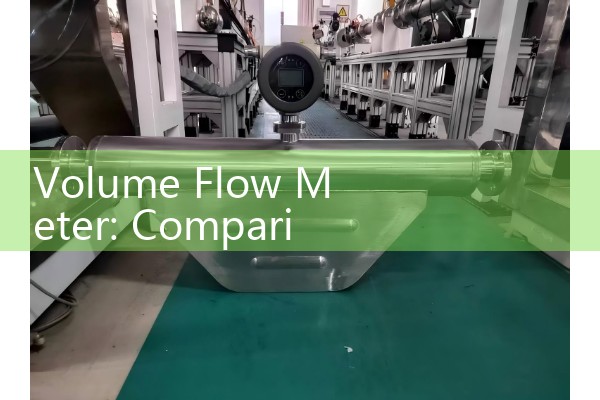
Inside a PD meter, rotating parts capture a known volume of fluid and move it from inlet to outlet. Our Silver Automation Instruments oval gear flow meter uses two precision-cut oval rotors. Every rotation displaces a fixed pocket of liquid. A sensor counts the rotations and the transmitter outputs a volumetric total in liters or gallons. Because the measuring chambers are physically sealed each cycle, slippage is very low. A DN15 oval gear meter with 316L housing can measure diesel at 0.5% accuracy down to 1.5 cP. When viscosity climbs to 1500 cP, the accuracy often improves because the fluid itself lubricates the gears and reduces internal leakage. In practice, a paint manufacturer in Southeast Asia uses our OGF-A series to batch alkyd resin at 2500 cP. They dose 800 L per batch with a repeatability within 0.1%.
How Vortex Flow Meters Work
A vortex meter has no moving parts in contact with the flow. A bluff body fixed inside the pipe generates alternating vortices downstream. The shedding frequency is proportional to flow velocity. A piezo sensor senses the pressure fluctuations and converts them to a 4-20 mA HART signal or a digital pulse. Silver Instruments supplies vortex meters in wafer and flanged designs from DN15 up to DN300. These meters handle saturated steam at 200 °C, compressed air at 12 bar, and heat transfer oil. A chemical plant in Saudi Arabia runs our VX series vortex meter on a 10 bar steam line. They get a stable reading at 3500 kg/h with only 15D straight pipe upstream using a built-in flow straightener. Since there is no mechanical contact, a vortex meter can operate for years in clean fluid service without recalibration.
Fluid Viscosity: The Deciding Factor
Here is the thing most engineers skip. A vortex meter needs a minimum Reynolds number to shed regular vortices. Below Re 10,000 the signal sometimes becomes erratic. This translates to a lower viscosity limit, typically under 30 cP for liquid applications. If your fluid sits at 100 cP or more, the vortex signal can drop out completely. PD meters love high viscosity because it reduces slip across the rotors. For fuel oil at 350 cP, our oval gear meter will read cleanly while a vortex meter might not give any output. So if your process involves wax, molasses, or heavy crude, a PD meter is the more reliable choice.
Handling Dirty or Particle-Laden Flows
Vortex meters tolerate small suspended solids better than PD meters. Abrasive particles can wear down gears and damage the rotors of a positive displacement meter. A vortex bluff body is robust and the sensor sits out of the main flow. A water treatment plant in Kenya uses a Silver Automation Instruments vortex meter for raw river water that contains silt. They install a 100-mesh strainer upstream but the vortex bluff body can handle the occasional grit. For sludge or liquids with fibers, however, we recommend electromagnetic meters. Oval gear meters would require fine filtration which adds pressure drop and maintenance cost. If your application is viscous and clean (hydraulic oil, palm oil), PD wins. If it is low-viscosity and dirty (unfiltered bilge water, brine), vortex holds an edge.
Temperature and Pressure Limits
Standard oval gear meters with PTFE/O-ring seals top out around 180 °C and 40 bar. Ex
Installation and Maintenance Across Industries
Vortex meters need straight pipe upstream and downstream. A typical rule is 15D upstream and 5D downstream. PD meters often need as little as 3D upstream. That is a big advantage in a cramped pumping skid. Last year a customer in Vietnam asked us to replace a turbine meter with a Silver oval gear meter for bunker fuel custody transfer. They saved space and eliminated the strainer intensive maintenance cycle. On the flip side, a PD meter with gears requires annual inspection if the fluid carries abrasive dust. A vortex meter with no moving parts can run for 5 years between inspections. In chemical blending, where flow rates change seasonally, a vortex meter provides a 15:1 turndown while a PD meter typically offers 10:1. But the PD meters totalized accuracy at low flows remains superior, often 0.3% even at 1% of max flow.
Model Selection Examples from Silver Automation Instruments
For heavy fuel oil transfer at 180 °C and 30 bar, our OGF-P series with A105 carbon steel body and PTFE gears works well. Output is a 4-20 mA pulse transmitter. For edible oil batching, the OGF-S series in 316L stainless steel with a local display provides IP67 protection and 0.5% accuracy. In steam networks, the VX-25 vortex flow meter in flanged DN50 with integrated temperature and pressure compensation gives mass flow in kg/h directly. It sends data via Modbus RTU to a paperless recorder. All Silver Automation Instruments meters accept loop-powered 24 V DC or battery-powered options for remote sites. The body materials cover 304, 316L, and Hastelloy C for corrosive chemicals.
FAQ: 5 Key Questions on Volume Flow Meter Selection
Q: What is the minimum viscosity for an oval gear PD meter?
A: Our oval gear meters start measuring reliably from 1 cP. Accuracy improves above 10 cP. Most users apply them between 5 cP and 5000 cP.
Q: Can a vortex flow meter measure compressed air?
A: Yes. Vortex meters work well with compressed air, nitrogen, and CO2. Specify the line pressure and temperature so Silver Instruments configures the correct density compensation. A DN40 vortex handles 20 to 300 Nm3/h of air at 8 bar.
Q: Do I need a strainer before a PD meter?
A: For fluids with particles larger than 100 microns, install a strainer. For clean oils and solvents, you can skip it. Our application engineers often size a Y-strainer with 60 mesh for diesel service.
Q: Which meter type lasts longer in steam service?
A: Vortex meters. PD meters are not designed for steam. A vortex meter with a remote transmitter and no moving parts handles 10 years of saturated steam at 10 bar with only occasional sensor checks.
Q: Can I get one supplier for both PD and vortex meters with global certifications?
A: Silver Automation Instruments supplies both technologies. Our vortex and oval gear meters carry CE, ATEX Zone 1, and ISO 9001 certificates. We ship to more than 60 countries and provide 3D model files for piping design.
Send us your fluid name, viscosity in cP, operating pressure in bar, temperature in °C, and pipe size in DN. We will reply with a comparison and price. Email: [email protected] | Tel: +86-25-68650347 | Whatsapp: +86-25-52155837 | WeChat: +86 15365082610