

 Current position > News detail
『Lorawan Water Flow Meter Networks: Deploying Battery-Powered Remote Loggers for Automated Municipal Billing』Related information(clamp on meter|electromagnetic meter|venturi meterrotameter|orifice meter|ultrasonic flow meter|mass flow meter|coriolis mass flow meter|coriolis flow meter|magnetic flow meter|magmeter flow meter|magflow flow meter|mag meter flow meter|electromagnetic flow meter|vortex flow meter|turbine flow meter|thermal mass flow meter|thermal flow meter|rotameter flow meter)
LoRaWAN Water Flow Meter Networks: Deploying Battery-Powered Remote Loggers for Automated Municipal Billing
Quick Answer: LoRaWAN water flow meter networks let a utility collect totalized volume data from hundreds of meters without manual reading. Silver Automation Instruments supplies electromagnetic and ultrasonic water flow meters plus battery-powered loggers that push readings to a LoRaWAN gateway. A DN50 electromagnetic meter with a 3.6 V lithium logger, 15 minute sampling, and 2 hour transmission can run more than 5 years on one battery.
Many water utilities still send staff to read mechanical meters by hand. The result is delayed billing, missed leaks, and disputes about consumption. LoRaWAN is not a lab concept. We have seen this on customer sites many times in Southeast Asia and Latin America. The gateway forwards data to billing software through MQTT or HTTPS.
Why Municipal Water Utilities Move to LoRaWAN Flow Metering
A water district in the Philippines replaced manual reading for 300 connections. Before the upgrade, billing took 8 days. After LoRaWAN loggers were installed on DN50 and DN80 electromagnetic flow meters, the district pulled data every morning. Staff now check exceptions instead of walking door to door. The cost per connection includes the meter, logger, antenna, and gateway share.
But not every site needs a full electromagnetic meter. For existing pipes, clamp-on ultrasonic flow meters can be installed without cutting the line. These meters transmit flow rate and totalizer via pulse or Modbus to a LoRaWAN logger. In practice, utilities choose electromagnetic meters for billing because of accuracy and long term stability.
Flow Meters and Loggers That Work Together
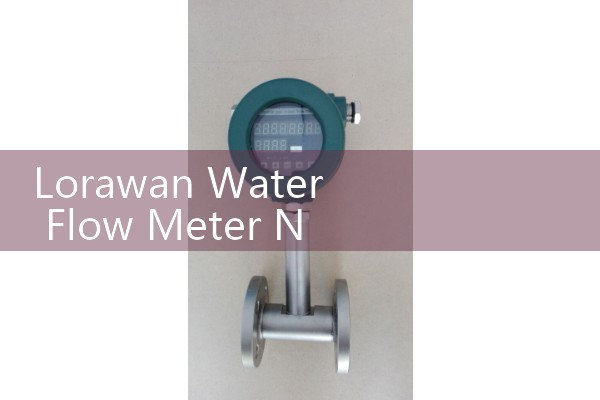
Silver Automation Instruments supplies electromagnetic flow meters from DN15 to DN300. A municipal billing point often uses DN50 or DN80. The meter output can be pulse, 4-20 mA HART, or RS485 Modbus RTU. The LoRaWAN logger reads the totalizer every 15 minutes and stores the value. The stored totalizer value becomes the billing record.
Battery choice matters more than most engineers expect. Use a 3.6 V lithium thionyl chloride D-cell with at least 19 Ah. A logger that samples every 15 minutes and transmits every 2 hours draws very little current. We have measured field units still above 3.4 V after 14 months in Vietnam. The measured voltage matches a 5 year projected life for most municipal billing cycles.
Here is the thing. The radio join and downlink settings drain batteries faster than the sensor reading. Keep confirmed uplinks off unless you need a command response. Use SF7 when the gateway is within 2 km and line of sight is acceptable. Use SF12 only for distant pits with poor antenna positions.
Battery Life and Data Cycle Design
The data cycle decides battery life. For billing, a 15 minute logging interval and 2 hour transmission interval is a good balance. The meter totalizer should be stored locally even when the gateway is offline. A logger with 8 MB of flash can store over 100 days of records at 15 minute intervals.
Temperature has a direct effect. Lithium thionyl chloride cells lose capacity below 0 °C. In cold water networks, put the battery pack inside a small insulated enclosure below the meter cover. Do not put the antenna below a cast iron lid. A short antenna riser above ground improves link budget by 10 to 15 dBm.
Municipal Billing Automation in Practice
Last year a water utility in Vietnam tested 200 battery powered LoRaWAN loggers on DN50 and DN80 electromagnetic flow meters. They recorded flow every 15 minutes and transm
Because the system sends totalized volume, billing disputes drop. A customer can see the same daily total on a web portal. There is no estimated bill. Leaks show up as continuous flow at 3 AM. Maintenance teams can schedule work before a pipe burst.
Installation Notes That Cut Failure Rates
Electromagnetic flow meters need a full pipe. Do not install the meter at the top of a pipe with air pockets. Use straight runs of 10 DN upstream and 5 DN downstream where possible. For DN50 that means 500 mm straight pipe before the meter. Grounding rings matter on plastic pipes. Without them the reading can drift.
Water conductivity from 100 to 800 µS/cm is normal and does not affect measurement. Viscosity near 1 cP is expected for clean water. Pressure transmitters can be added to the same logger if the utility wants pressure monitoring at district metering points. Use a PT100 sensor if temperature compensation is needed for billing volume correction.
Logger enclosure should be IP68 when installed in a meter pit. Use PN16 flanges on DN50 and PN10 or PN16 on DN80 where pressure allows. For lift stations with possible methane, select an ATEX Zone 1 rated sensor and logger. Not every municipal site needs this. But if the chamber is classified, selecting ATEX rated hardware early avoids delays.
FAQ
Can LoRaWAN flow meters handle billing grade totalizer accuracy?
Yes. The flow meter stores the totalizer internally. The LoRaWAN logger reads that value. Radio losses do not affect the accumulated volume. Use an electromagnetic flow meter with accuracy of plus or minus 0.5 percent of reading or plus or minus 0.2 percent of reading depending on the model.
How long do batteries last with 15 minute sampling?
With a 3.6 V lithium D-cell and 2 hour transmission, a well configured logger runs 4 to 6 years. Colder sites or confirmed uplinks can reduce battery life to 2 years. Always check battery voltage in the data payload.
What flow meter type is best for municipal water?
Electromagnetic flow meters are the first choice for DN15 to DN300 billing points. For temporary checks or large existing pipes, clamp-on ultrasonic flow meters work without cutting the line. Mechanical meters can be used but they need a pulse output adapter.
Can the system work with existing SCADA or billing software?
Yes. The LoRaWAN gateway outputs MQTT or HTTPS. Many utilities use Node-RED or a small middleware tool to convert payloads to CSV or API calls. Silver Automation Instruments can provide sample payload documentation for your software team.
What is the typical range from meter to gateway?
In dense urban areas, 2 to 3 km is common. In flat rural water networks, 8 to 10 km is possible with a high antenna and SF12. The actual range depends on antenna height, buildings, and gateway placement.
Get a Quotation for a LoRaWAN Water Meter Network
Send us your pipe size in DN, flow range in m3/h or kg/h, pressure in bar, temperature in °C, and distance from the meter to the gateway. Our engineers will recommend a flow meter and battery powered logger combination for automated municipal billing. Contact Silver Automation Instruments at Tel: +86-25-68650347, Whatsapp: +86-25-52155837, WeChat: +86 15365082610. You can also review the water meter selection at flow-meter.com.au.