

 Current position > Product detail
『Extra Heavy Crude Oil Flow Meter Heat Tracing Guidelines』Related information(clamp on meter|electromagnetic meter|venturi meterrotameter|orifice meter|ultrasonic flow meter|mass flow meter|coriolis mass flow meter|coriolis flow meter|magnetic flow meter|magmeter flow meter|magflow flow meter|mag meter flow meter|electromagnetic flow meter|vortex flow meter|turbine flow meter|thermal mass flow meter|thermal flow meter|rotameter flow meter)
Extra Heavy Crude Oil Flow Meter Heat Tracing Guidelines
Quick Answer: Extra heavy crude oil turns solid at ambient temperatures. You need heat tracing on the flow meter body and process connections. Electric tracing with a PT100 sensor and thermostat control keeps the oil above its pour point. Silver Instruments supplies Coriolis and oval gear meters with integrated heat tracing jackets for this exact job.
Why heat tracing is not optional for extra heavy crude
We are talking about crude with API gravity below 10 and viscosities over 10,000 cP at 20 °C. This oil does not flow. It gels. You can heat the pipe all you want. But if the flow meter body cools down, the oil inside solidifies in minutes. You lose measurement. You can even damage the meter internals.
In the Middle East, tank farms handle extra heavy crude from Venezuela, Mexico, and Canada. Shipments arrive with cargo temperatures around 40 to 60 °C. Bunkering and transfer lines must keep the oil hot. Any cold spot on the flow meter becomes a plug point. Heat tracing is not a nice-to-have. It is part of the metering system design.
Electric heat tracing versus steam tracing on flow meters
Most sites we support use electric tracing. It is easier to control and does not depend on a steam boiler. A self-regulating heating cable wraps around the meter housing. You add a PT100 sensor to the meter body. A simple thermostat or a 4-20 mA HART controller switches the heating circuit. Typical set point for extra heavy crude: 70 to 90 °C.
Steam tracing is common in refineries that already have steam lines. Copper or stainless steel tubing runs alongside the meter. The challenge is keeping the temperature even. We have seen steam tracing overshoot and create hot spots above 150 °C. That can degrade the oil or damage electronics. For custody transfer with Coriolis meters, we recommend electric tracing with an ATEX Zone 1 thermostat. It keeps the meter tube temperature stable within ±1 °C.
Flow meter types and how they handle tracing
Coriolis mass flow meters. Silver Automation Instruments offers models from DN15 to DN200 for heavy oil. The twin-tube design self-drains only if kept hot. We build a custom-fit heating jacket with silicone insulation. The jacket runs on 230 VAC or 110 VAC single phase. It covers the entire sensor housing including flanges. No cold bridges.
Oval gear positive displacement meters. These are cost-effective for bunker fuel and heavy oil transfer. But oval gear meters trap oil between the gears. If the oil solidifies, the gears lock. We install a low-watt-density heating element directly in the meter chamber wall. Combined with an external insulation blanket, it keeps the internal volume above 60 °C even during a 30-minute shutdown.
Installation rules we enforce on every project
Do not heat trace only the pipe and leav
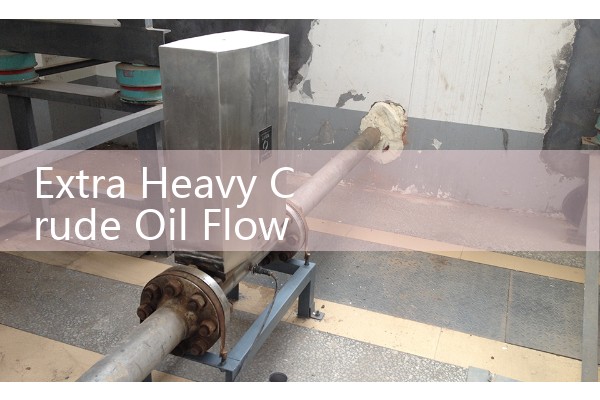
Mount the thermostat sensor at the coldest point. That is usually the bottom of the flow meter body where condensate can collect. Program the controller with an alarm at 10 °C below set point. Wire that alarm to the control room 4-20 mA loop. You want to know about a heater failure before the oil cools.
For hazardous areas ATEX Zone 1 or IECEx, use certified heating cable and glands. All Silver Instruments heavy oil meters come with an Ex e or Ex d junction box pre-wired to the heating element. You just connect the power supply in the safe area.
Real-world setup for a floating storage unit in West Africa
Last year a customer in Ghana required flow measurement on a FSO vessel unloading line. Oil temperature at the manifold was 50 °C. Ambient at night dropped to 22 °C. The pour point of their crude was 38 °C. We supplied a DN80 Coriolis meter with a 300 W heating jacket. The jacket kept the meter at 65 °C. During a 12-hour standby, oil inside never dropped below 45 °C. No flushing. No solidified mass. The operator verified this with seven spot checks over two months.
Ordering data to prepare before you contact us
Send us your pressure in bar, temperature in Celsius, pipe size DN, and flow range in kg/h. Tell us your power supply voltage and hazardous area classification. We will propose a flow meter with heat tracing already sized. No generic contact form. We need the actual process numbers.
FAQ
Can I add heat tracing to an existing flow meter?
Yes, for flanged Coriolis and oval gear meters. We can supply a retrofit jacket with heating cable and insulation. You need to confirm the meter body material and dimension.
Does heat tracing affect the flow meter accuracy?
Properly installed tracing with stable temperature control improves accuracy. It eliminates viscosity changes inside the meter. Coriolis meters show no drift from the heating jacket mass because zero adjustment corrects it.
What is the power consumption for a typical tracing system?
A DN50 meter jacket uses around 150 to 200 W. DN100 goes up to 400 W. We design for 230 VAC single phase unless your site uses 110 VAC.
Is heat tracing needed for light crude oil?
No, light crude with API above 31 flows at ambient temperatures down to 10 °C. You only need tracing for waxy or asphaltenic crudes with high pour points.
What about thermal insulation over the tracing?
Always. Do not run heat tracing without an insulation cover. Silver Instruments provides a removable fiberglass or silicone jacket that fits over the heating element. This keeps energy costs low and the meter safe to touch.