

 Current position > News detail
『Endress Magnetic Flow Meter Grounding Requirements for Plastic Pipelines』Related information(clamp on meter|electromagnetic meter|venturi meterrotameter|orifice meter|ultrasonic flow meter|mass flow meter|coriolis mass flow meter|coriolis flow meter|magnetic flow meter|magmeter flow meter|magflow flow meter|mag meter flow meter|electromagnetic flow meter|vortex flow meter|turbine flow meter|thermal mass flow meter|thermal flow meter|rotameter flow meter)

Endress Magnetic Flow Meter Grounding Requirements for Plastic Pipelines
Quick Answer: Magnetic flow meters on plastic pipes need a dedicated ground connection because plastic does not conduct electricity. Endress+Hauser manuals specify grounding rings, grounding electrodes, or an integrated ground plate inside the lining protector. Without a proper ground, the 4-20 mA output becomes noisy, and the flow reading drifts. Silver Automation Instruments supplies compatible grounding rings in 316L, Hastelloy, and tantalum, and many of our magmeters have built-in grounding electrodes that eliminate the need for extra rings.
Why Plastic Pipelines Break the Ground Path
A magnetic flow meter works by measuring the tiny voltage generated when a conductive fluid moves through a magnetic field. The meter body must sit at the same electrical potential as the fluid. In a metal pipe, a simple ground strap between the flanges and the pipe does the job. Plastic pipes, such as PVC, PP, and GRP, break that electrical path. The same problem happens with metal pipes that have an internal rubber or PTFE liner. Because the pipe wall is non-conductive, the meter cannot find a clean zero reference. The result is an unstable flow signal, zero drift, and frequent re-zeroing. In practice, many engineers discover this only after startup, when the 4-20 mA signal jumps even with no flow.
Official Endress+Hauser Grounding Methods
Endress+Hauser installation manuals for Promag 10, Promag 50, and Promag 300 series describe three common grounding options for plastic or lined pipes. The first is a grounding ring installed between meter and pipe flanges. The ring has a terminal lug that you connect directly to earth or to the meter’s ground terminal. The second method uses a grounding electrode built into the flow tube, often a pin-shaped electrode that contacts the fluid. The third method applies when the meter uses a lining protector. In that case, the protector itself acts as a ground plate and must be wired to earth. Endress specifies ring material based on fluid: 316L for water, Hastelloy for aggressive wastewater, tantalum for strong acids. For hygienic food lines, a stainless steel ground ring with a surface finish below Ra 0.8 fits CIP cleaning. Always check your specific Promag model IO manual for grounding torque values and earthing cable cross-section. A typical requirement is a copper conductor of at least 4 mm2.
Selecting the Right Grounding Material
Material choice depends on corrosion resistance and chemical compatibility, not just conductivity. For potable water and utility cooling water, a 316L stainless steel ground ring works for years. In a desalination plant RO permeate line, the low conductivity of 10 to 20 µS/cm still requires a ground ring, and 316L remains a safe pick. For an Indonesian palm oil mill handling hot, acidic sludge, we often recommend Hastelloy C-22 ground rings. A specialty chemical plant in Thailand once used tantalum ground rings for a mixed acid stream at 80 degree C and 4 bar pressure. The cost was higher but avoided quarterly ring replacement. Silver Automation Instruments stocks ground rings from DN15 up to DN600 with pressure ratings from PN10 to PN40. For larger pipe sizes or exotic alloy req
Silver Automation Instruments Grounding Solutions and Flow Meters
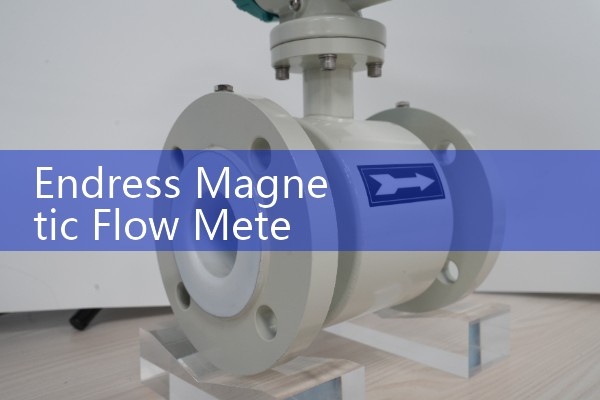
We manufacture the SIL-EMF series magnetic flow meters, which already integrate grounding electrodes inside the ceramic or PTFE liner. This design means you do not need to install a separate ground ring on a plastic pipeline. The meter itself provides the fluid grounding path through its third electrode. This saves mounting space, reduces leak points, and lowers the total installed cost. SIL-EMF flow meters cover DN15 through DN2000, handle process temperatures from -25 degree C to 150 degree C, and output 4-20 mA HART with optional RS485 Modbus. Our meters accept fluid conductivity as low as 5 µS/cm, matching the Endress+Hauser minimum requirement. For plants that prefer using existing Endress magmeters and only need grounding rings, we supply loose 316L, Hastelloy, and tantalum rings at competitive lead times. A water treatment plant in the Philippines recently replaced corroded ground rings on ten Promag 50 units with our titanium rings and halved their replacement cycle.
Get a quote for your project. Send us your pipe material, pipe size (DN), fluid type, conductivity in µS/cm, temperature in degree C, and pressure in bar. Reach Silver Automation Instruments at [email protected], call +86-25-68650347, or message us on WhatsApp at +86-25-52155837. WeChat available on +86 15365082610. Our team replies within 24 hours and ships from China to Southeast Asia, Oceania, the Middle East, Africa, and Latin America.
FAQ
Q: Can I install a magnetic flow meter on PVC pipe without a ground ring?
A: It is not recommended. The signal will be noisy and drift. You need at least a flow meter with a built-in grounding electrode or an external ground ring connected to earth.
Q: What is the minimum fluid conductivity for an Endress magmeter on a plastic line?
A: Endress+Hauser generally needs at least 5 µS/cm. For lower conductivity media like ultra-pure water, a special capacitive sensor might be required. Silver Instruments magmeters also require a minimum of 5 µS/cm.
Q: Does a PTFE-lined metal pipe need a grounding ring?
A: Yes, definitely. The PTFE lining insulates the fluid from the metal pipe, so it behaves like a plastic pipeline. Use a grounding ring or a meter with an integrated ground electrode.
Q: How do I size a ground ring for a Promag flow meter?
A: The ring matches the nominal diameter (DN) and the flange pressure rating. For instance, a DN80 PN16 flow meter uses a DN80 PN16 ground ring. Send us the meter model and we will supply the correct size.
Q: Will a Silver Instruments flow meter replace an Endress meter on a plastic pipe without extra grounding parts?
A: Yes. Our SIL-EMF series includes a built-in grounding electrode, so you can mount it directly on PVC or GRP pipe and achieve a stable signal without separate ground rings. Many plants in Australia and Southeast Asia have adopted this solution.