

 Current position > News detail
『Water Flow Meter Types: Magnetic, Ultrasonic, and Turbine Compared』Related information(clamp on meter|electromagnetic meter|venturi meterrotameter|orifice meter|ultrasonic flow meter|mass flow meter|coriolis mass flow meter|coriolis flow meter|magnetic flow meter|magmeter flow meter|magflow flow meter|mag meter flow meter|electromagnetic flow meter|vortex flow meter|turbine flow meter|thermal mass flow meter|thermal flow meter|rotameter flow meter)

Water Flow Meter Types: Magnetic, Ultrasonic, and Turbine Compared
Why the choice between magnetic, ultrasonic, and turbine still confuses many engineers
At Silver Automation Instruments, we receive RFQs every week where the customer lists only "flow meter for water" and leaves the rest blank. That is not enough. Water is not just water. It could be demineralized water with conductivity below 5 µS/cm, raw river water full of silt, or hot boiler feedwater at 180 °C. Each type demands a different meter. The three workhorse technologies in industrial water flow measurement remain magnetic, ultrasonic, and turbine. They are the most quoted, most compared, and most misapplied. Here is the thing: all three can measure water. But the moment you add a few real process conditions like pipe size, temperature, suspended solids, or conductivity, the list narrows fast.
Magnetic flow meters: the go-to for conductive liquids and dirty water
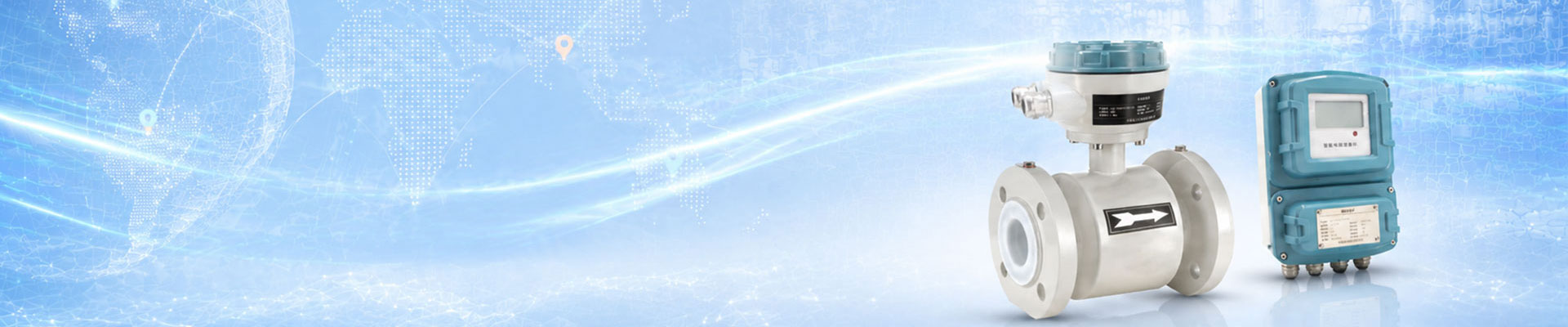
Magnetic flow meters, or magmeters, work on Faraday’s law. A pair of coils generates a magnetic field across the pipe. Conductive liquid moving through the field induces a voltage proportional to velocity. No moving parts. No obstructions. The liner choices PTFE, PFA, hard rubber, or ceramic define chemical compatibility and pressure limits. We ship magmeters with DN3 sensors for chemical dosing skids all the way up to DN2000 for large water transmission mains. In practice, magmeters dominate in water and wastewater plants across Southeast Asia and the Middle East because they ignore suspended solids, sludge, and slurry. A wastewater treatment plant in the Philippines recently replaced a turbine meter on sludge return lines with a Silver Instruments magmeter after the turbine bearings seized within three months. The magmeter runs with zero maintenance since installation.
Conductivity is the hard limit. You need at least 5 µS/cm, and some meters demand 20 µS/cm for full accuracy. Demineralized or deionized water, pure condensate, and certain hydrocarbons fall below that threshold. We have seen oil and gas engineers try magmeters on produced water with low conductivity and wonder why the reading chatters. Simple fix: switch to ultrasonic or Coriolis. For typical municipal water at 200 µS/cm or chemical solutions above 50 µS/cm, magmeters deliver ±0.2 percent of reading accuracy with a 0.5 m/s minimum flow velocity. Power consumption is low, and 4-20 mA HART with pulse output covers most SCADA connections. Our customers in Indonesia often add GSM/GPRS remote telemetry units to Silver Instruments magmeters for wellfield monitoring without visiting the site. Flange connections follow EN 1092-1 PN16 or ANSI 150 lb, and ATEX Zone 1 approvals are available for miners in Latin America.
Ultrasonic flow meters: clamp-on convenience versus inline precision
Ultrasonic meters split into two camps: transit-time and Doppler. Transit-time sends acoustic pulses upstream and downstream between two transducers. The difference in travel time gives flow velocity. Doppler relies on reflected signals from bubbles or particles. Most clean water applications use transit-time. In clamp-on form, the transducers strap onto the outside of an existing pipe; no cutting, welding, or process shutdown needed. That alone sells the technology for retrofit projects in Australia and the Middle East where shutdown windows are tight and permission for hot work is a headache. We have supplied clamp-on ultrasonic meters for seawater intake lines at a desalination plant in Oman, pipe size DN800 carbon steel, no liners, no corrosion worries.
Accuracy depends heavily on pipe data. Engineers must input exact pipe outside diameter, wall thickness, material, and lining. A manual caliper measurement beats a datasheet guess. We learned this the hard way on a project in Vietnam where the contractor used a nominal wall thickness instead of measured, and the meter read 3 percent high for six months. With proper setup, clamp-on meters achieve ±1 percent of reading or better. Inline spool-piece ultrasonic meters raise accuracy to ±0.5 percent and can handle higher temperatures up to 180 °C, but they require a process shutdown for installation. For temporary flow surveys, pump efficiency testing, or leak detection on large pipes, nothing beats a portable ultrasonic meter. Silver Instruments offers both portable clamp-on and fixed inline ultrasonic flow meters with Modbus RTU and 4-20 mA outputs, calibrated on a NIST-traceable rig.
The technology hits a wall with entrained air or high solids. Five percent gas bubbl
Turbine flow meters: fast, cost-effective, and unforgiving of dirt
Turbine meters have a rotor with blades that spin as liquid passes. A magnetic pickup counts pulses per revolution, and the frequency maps to flow rate. They excel on clean, low-viscosity fluids: water, fuels, solvents, light oils. The response time is fast under 10 ms. That makes them the default for batching, dosing, and custody transfer where every pulse matters. A small oil depot in Nigeria uses Silver Instruments turbine meters on diesel and gasoline loading arms, paired with a batch controller and PT100 temperature compensation to correct volume to 15 °C. The meters achieve ±0.5 percent linearity over a 10:1 turndown.
The weakness: anything that can clog bearings or erode the rotor kills a turbine meter fast. Sand, silt, debris, and magnetic particles from corroded steel pipes are all enemies. Install a Y-strainer 10 pipe diameters upstream. Many site failures we troubleshoot trace back to a missing or clogged strainer. Viscosity changes also shift the calibration curve. A customer in Thailand switched from water to a warm syrup mixture with viscosity above 50 cP and the meter under-registered by 15 percent. Turbine meters work best on water-like viscosities between 0.5 and 5 cP. For thicker fluids, positive displacement or Coriolis meters are more accurate. Pressure drop is another trade-off. The rotor and support structure create permanent head loss, typically 0.5 to 1 bar at maximum flow. In low-pressure gravity systems, that can be a dealbreaker.
Silver Instruments turbine flow meters are available with tungsten carbide bearings for extended life, 4-20 mA or pulse output, and NPT or flanged connections from DN10 to DN300. For high-pressure applications up to 400 bar, we supply a stainless steel body option. Always specify the actual fluid viscosity and operating temperature so we calibrate correctly.
Side-by-side comparison for real plant decisions
Plant engineers in the Middle East often ask us: “We need a flow meter for a 12-inch raw water pipe, budget is tight, what do you recommend?” Here is how we answer. If the water has suspended solids and the pipe is always full, a magmeter wins on lifetime cost because there is no strainer to clean, no bearings to replace. Accuracy holds steady for years. If the line cannot be shut down and the pipe outside is accessible, clamp-on ultrasonic is the practical choice, even if accuracy is slightly lower. If the water is clean and the budget is extremely tight, a turbine meter with a strainer does the job, and pulse resolution is excellent for batching. We ship all three brands of meters from Silver Automation Instruments, so we do not push one over the other. We match the meter to the process conditions you give us.
How to get a quote that fits your site
Send us your pressure (bar), temperature (°C), pipe size (DN), flow range, fluid type and conductivity if known, and we will propose a specific model with price and delivery. Our team reads these parameters every day. Missing pipe size or fluid conductivity just delays the quote. Email: [email protected] | Tel: +86-25-68650347 | Whatsapp: +86-25-52155837 | WeChat: +86 15365082610.
Frequently Asked Questions
Can a magnetic flow meter measure non-conductive water? No. Fluids with conductivity below 5 µS/cm, like demineralized water, will produce unstable or zero readings. Use an ultrasonic or Coriolis mass flow meter for those applications.
Does a clamp-on ultrasonic flow meter work on rusty pipes? It can, after surface preparation. Remove loose rust and scale, grind a smooth flat spot, and apply coupling gel. Heavy pitting or internal scale that changes acoustic path will degrade accuracy.
What maintenance does a turbine flow meter need? Clean or replace the inlet strainer regularly, check bearing noise, and recalibrate every 12 months if used for custody transfer. Viscosity or debris damage is common, so inspect the rotor if flow readings drift.
Which meter has the lowest pressure drop? A full-bore magnetic flow meter has near-zero pressure drop because there is no obstruction. Clamp-on ultrasonic has none. Turbine meters have the highest permanent head loss among the three.
Can I use the same meter on multiple liquids? A magmeter works on any conductive liquid that is chemically compatible with its liner and electrodes. A turbine meter requires recalibration if viscosity changes significantly. Clamp-on ultrasonic meters can switch pipes easily if pipe parameters are updated.